

AirLink*
AirLink is a tethered unmanned aerial system that can be carried on foot. Its 3 kW power capacity is designed to fit into a system under 15 kg that one operator can carry. *
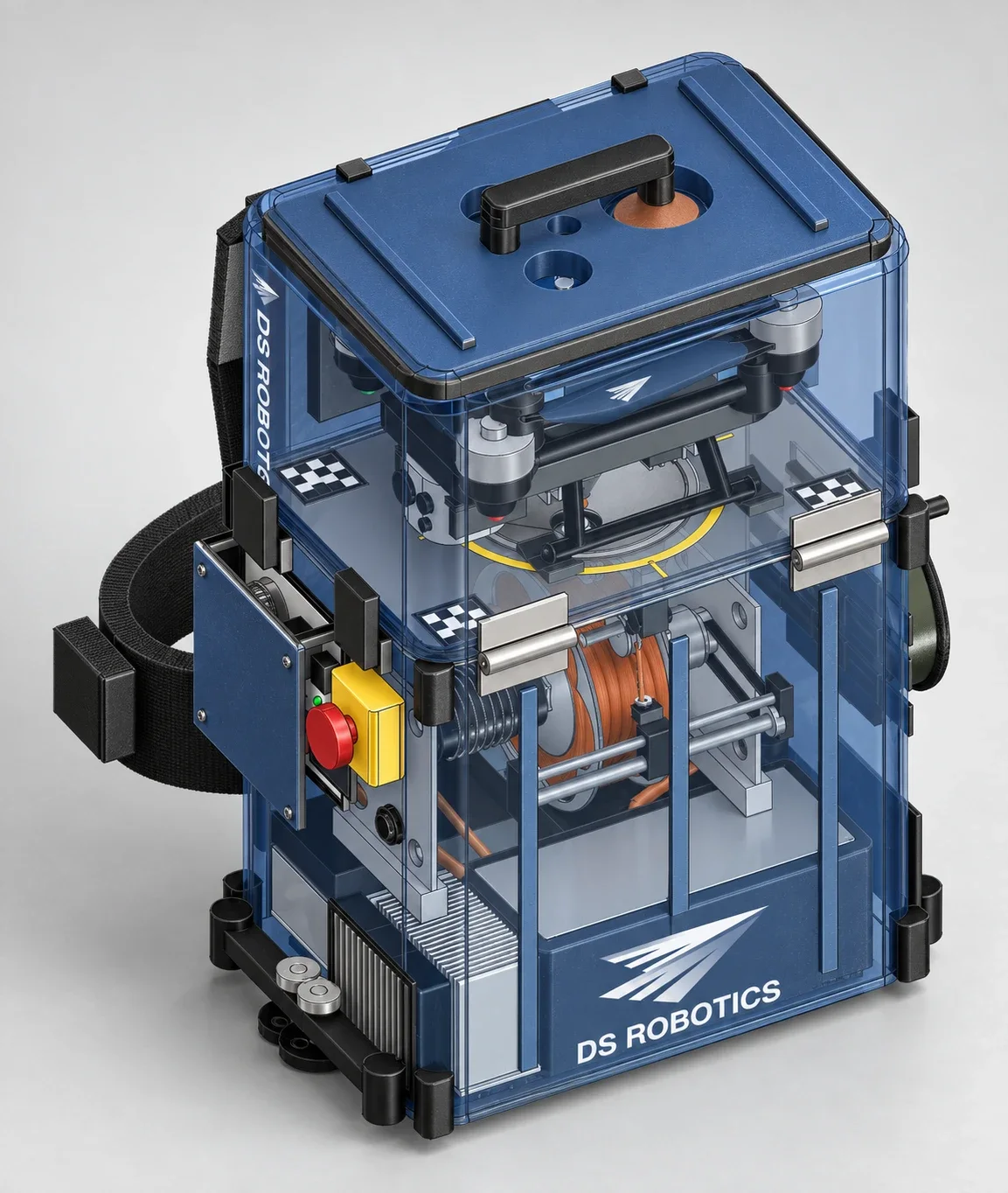
Uninterrupted power delivery from a portable ground unit
AirLink delivers 3 kW of power capacity in a compact form under 15 kg that a single operator can carry. Persistent aerial observation can therefore reach sites vehicles cannot. *
An HVDC (High Voltage DC) architecture for efficient power transfer over an 80 m tether. The ideal power density is approximately 2.5 kW/dm³.
- POWER
- 3 kW *
- EFFICIENCY
- 94% *
- LINE VOLTAGE
- 400–800 V DC *
Data and power travel on the same conductor. Communication runs over the power line, with no separate RF link required.
- DATA RATE
- 50 Mbps *
- BASIS
- IEEE 1901 BASED
- TRANSMISSION
- OVER THE TETHER
Autonomous drum management and a servo-torque algorithm keep tether tension under control throughout the flight.
- TETHER LENGTH
- 80 m *
- CONTROL
- AUTONOMOUS
- PRECISION
- ms *
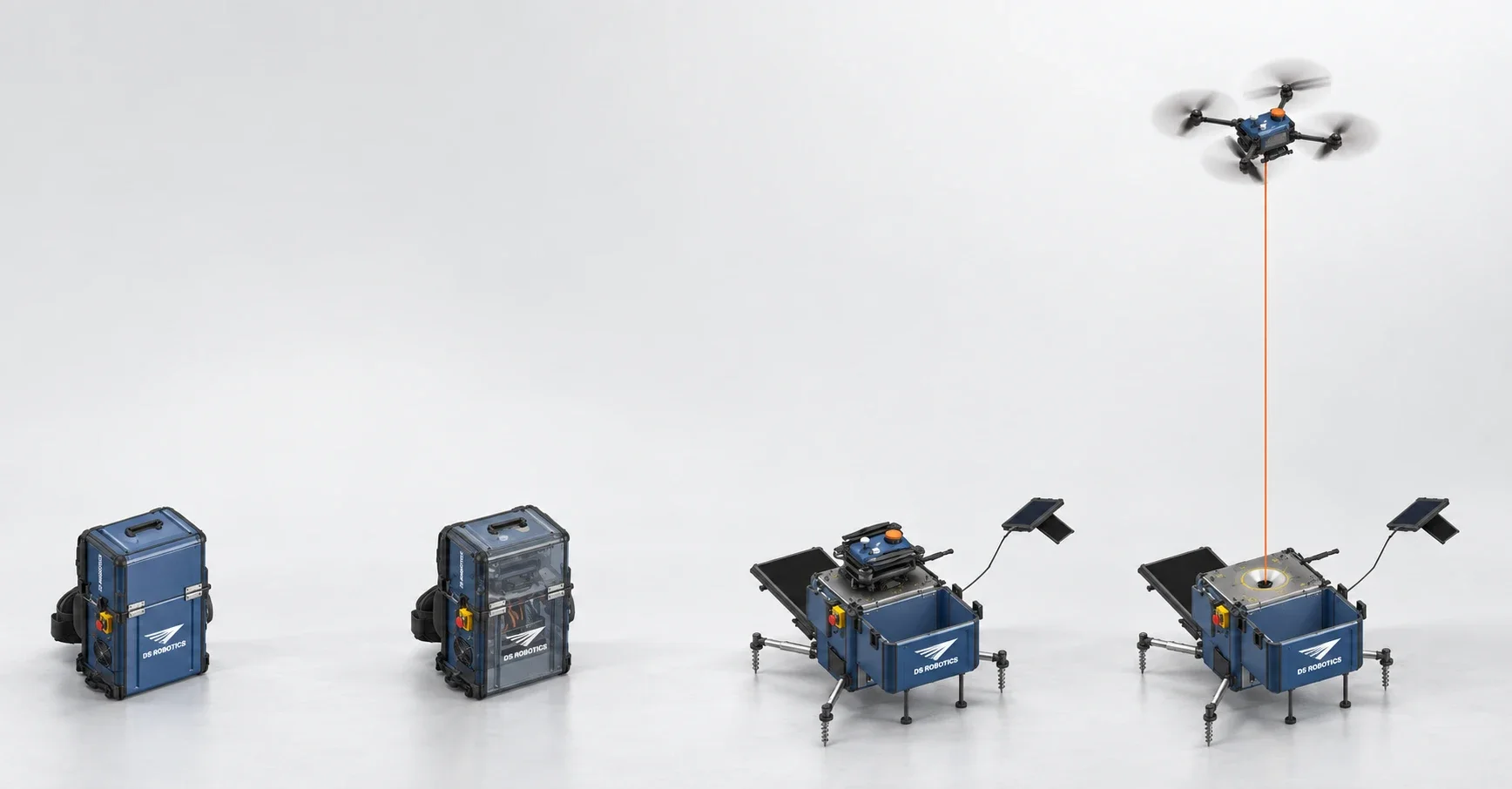
Set-up sequence from carrying to tethered flight
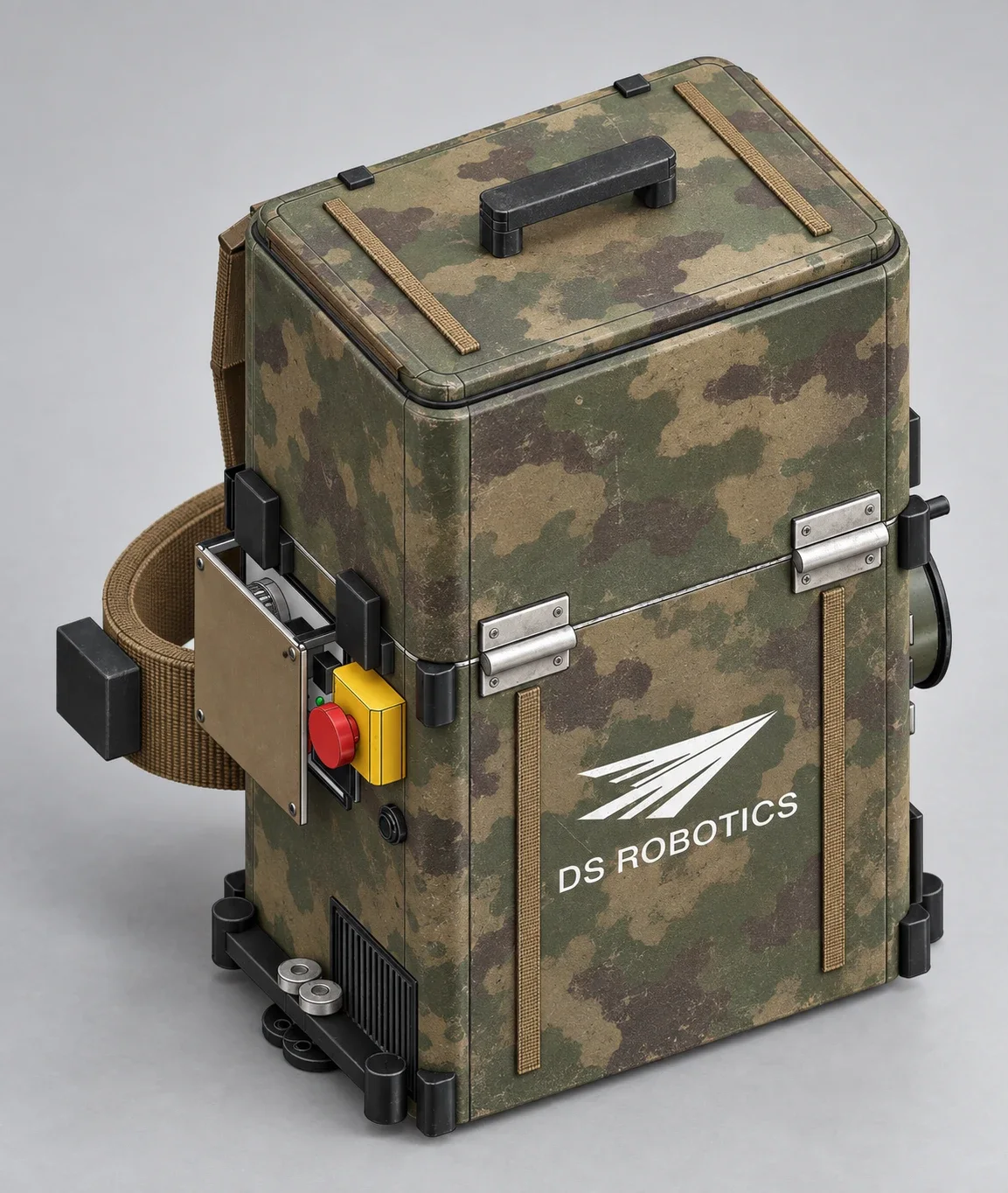
Camouflage field version.
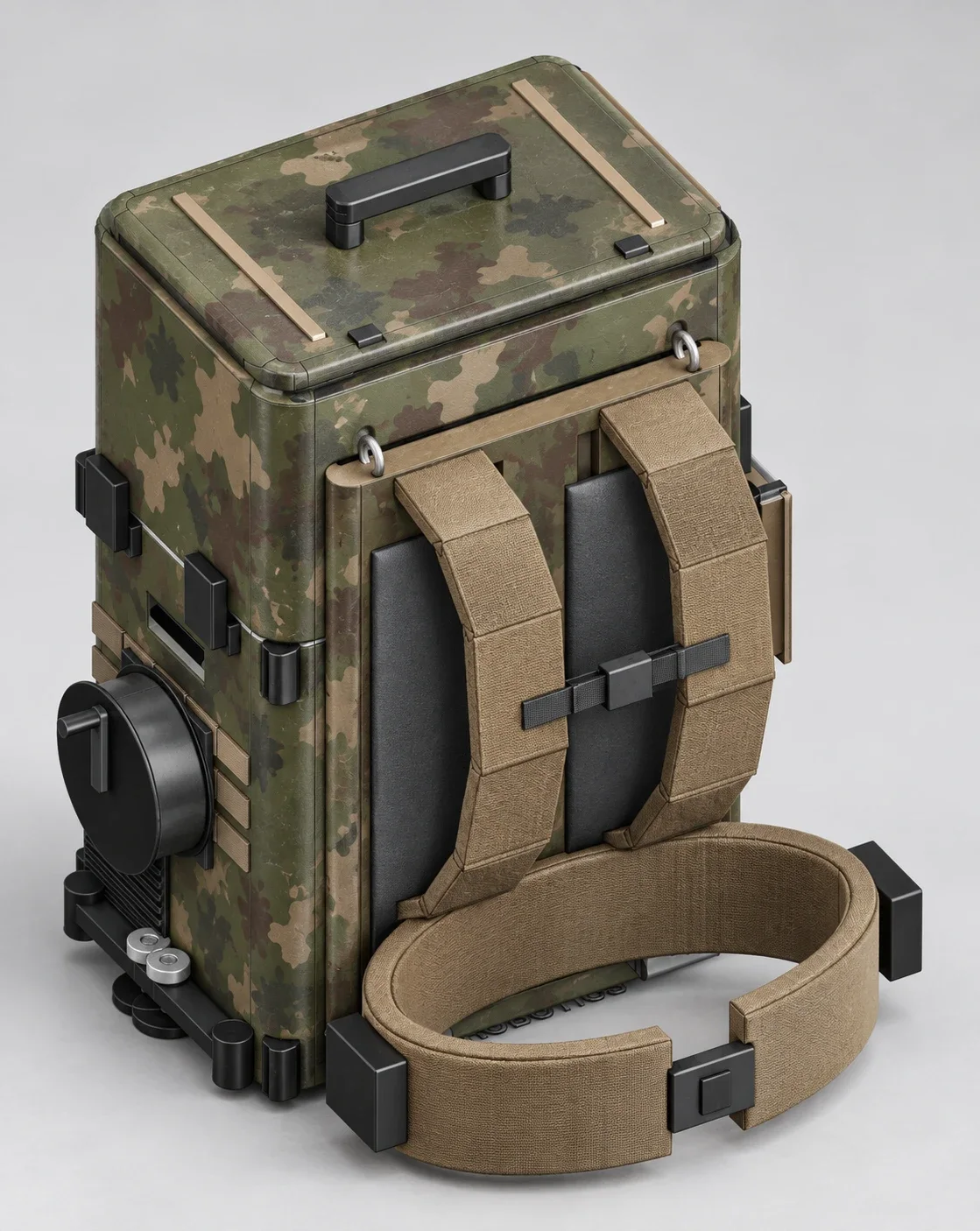
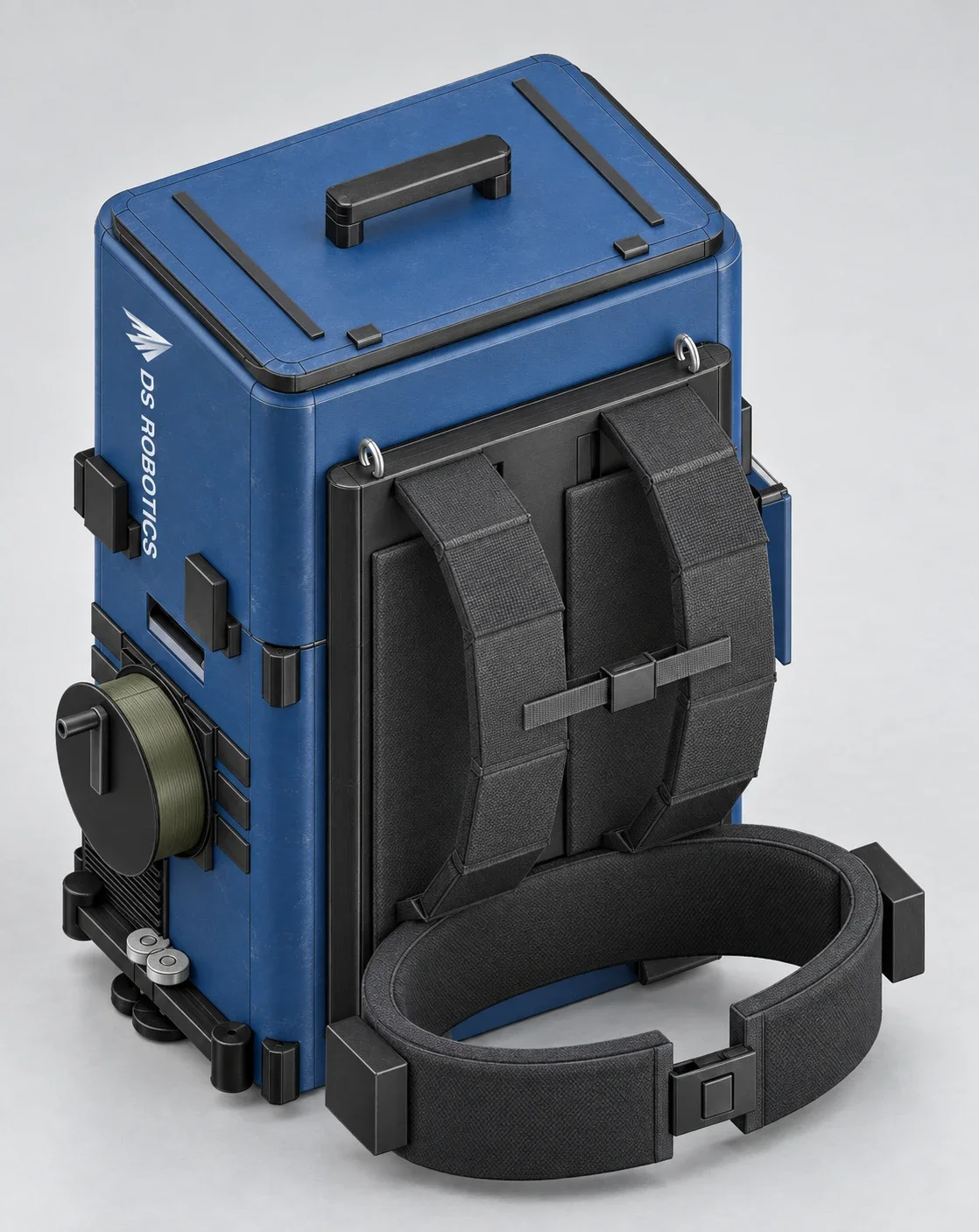
The ground unit is designed to be carried on foot.
The AirLink ground unit is built as a backpack. This form governs the whole system architecture: the power electronics, tether drum, safety battery and thermal management are all placed inside one carryable volume.
The weight budget is therefore the primary engineering criterion of the design. The result is a fully functional ground station that can be moved on foot.
| PARAMETER | TECHNICAL DETAIL | CRITICAL THRESHOLD / STANDARD |
|---|---|---|
| Airborne power unit | 1.5 kW and 2.5 kW modular options | Lightweight aluminium body |
| Energy transmission | 400 V – 800 V DC HVDC line | Low-cross-section hybrid tether |
| Data transmission | IEEE 1901-based broadband PLC, 50 Mbps * | RF-independent link |
| Safety redundancy | Seamless switch-over | Integrated safety battery |
| Environmental range | −20 °C / +55 °C operating range * | Design criterion |
Safety measures against tether damage and loss of power
Fire monitoring, search and rescue, and an uninterrupted communications relay over disaster areas.
Border patrol, base protection and observation scenarios under RF interference.
Autonomous inspection of power transmission lines, dams and wind turbines.
Request a technical briefing on the AirLink programme.
Write to us about R&D partnership, pilot deployment and supply. Requests for detailed technical documentation are considered under a mutual non-disclosure agreement.